
New: How do we know when this first contact happened? Vikings reached America in 1021: how a solar storm in the tree rings proved it.
Published: December 2024 | Reading Time: 8 minutes
Long before Christopher Columbus set sail in 1492, Norse explorers had already reached the shores of North America—and they weren’t alone. The Viking encounters with Native American tribes represent one of history’s most fascinating yet overlooked chapters of cross-cultural contact.
The Norse Discovery: More Than Just Legend
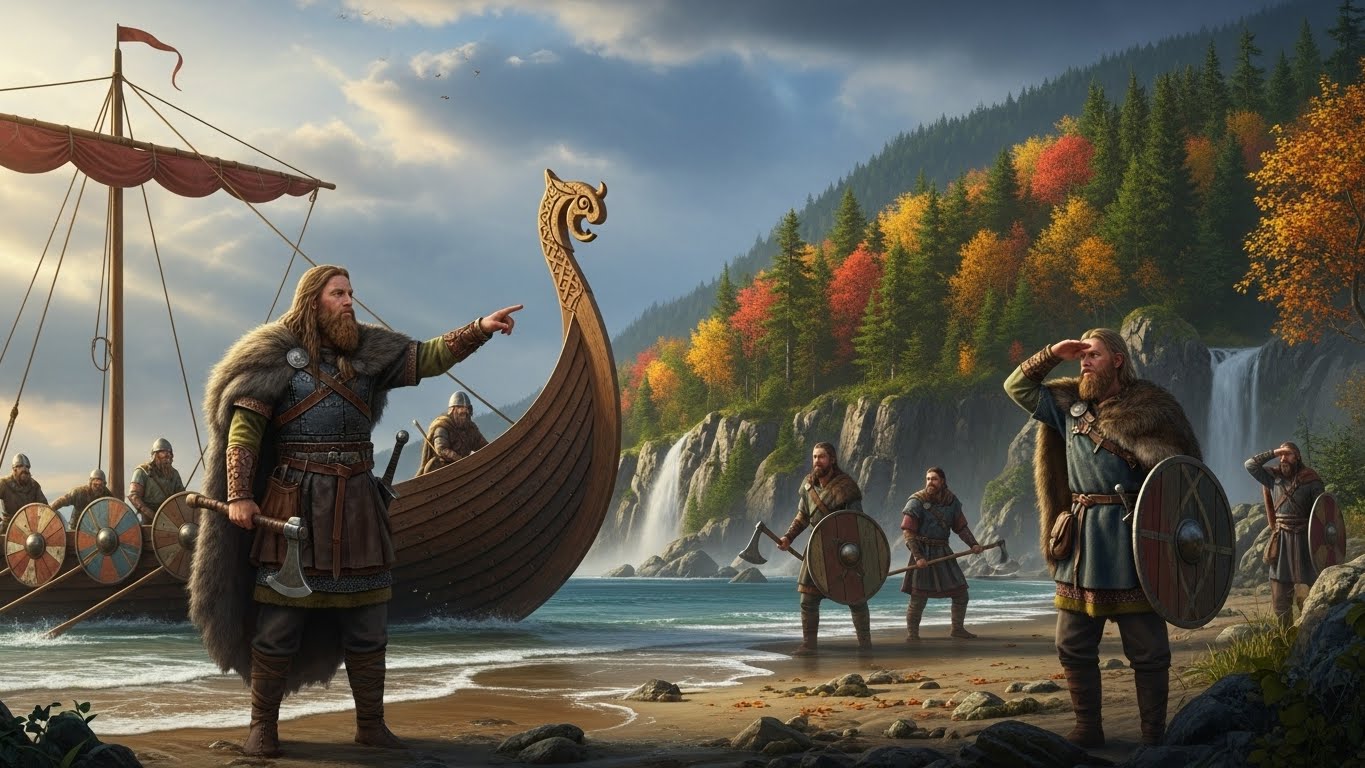
For centuries, tales of Viking voyages to a mysterious land called “Vinland” were dismissed as Norse mythology. However, archaeological discoveries in the 1960s changed everything. The excavation of L’Anse aux Meadows in Newfoundland, Canada, provided concrete proof that Vikings established settlements in North America around 1000 CE—nearly 500 years before Columbus.
Quick Facts: Viking Exploration Timeline
- 986 CE: Erik the Red establishes settlements in Greenland
- 1000 CE: Leif Erikson reaches North America
- 1960: L’Anse aux Meadows discovered by archaeologists
- 2021: New evidence suggests Vikings in North America by 1021 CE
Who Were the “Skrælings”?

In the Norse sagas, particularly the Saga of the Greenlanders and the Saga of Erik the Red, indigenous peoples are referred to as “Skrælings”—a term whose exact meaning remains debated among scholars. These texts provide our primary written accounts of Viking-Native American encounters.
The Skrælings mentioned in the sagas were likely members of several indigenous groups:
| Indigenous Group | Location | Likely Contact Period |
|---|---|---|
| Beothuk People | Newfoundland | 1000-1010 CE |
| Dorset Culture (Paleo-Eskimo) | Arctic Canada | 1000-1200 CE |
| Thule People (ancestors of Inuit) | Greenland/Arctic | 1200-1400 CE |
The First Encounters: Trade, Tension, and Tragedy
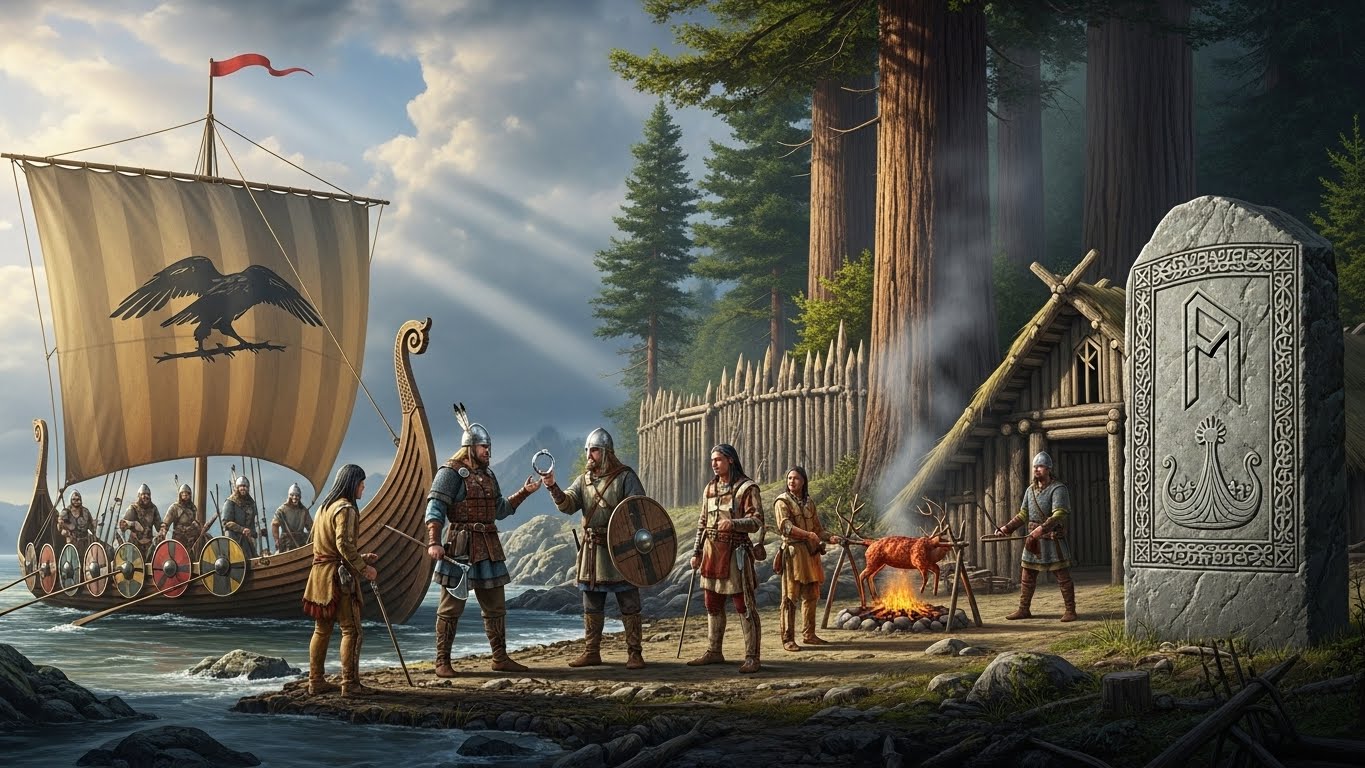
According to the sagas, initial meetings between Vikings and Native tribes were cautious but peaceful. The Greenlanders’ Saga describes an early trading encounter where indigenous people arrived in skin boats, curious about the newcomers. The Norse offered red cloth in exchange for furs—a transaction that seemed promising at first.
What Went Wrong?
Despite peaceful beginnings, relations deteriorated quickly:
- Cultural misunderstandings led to conflicts
- A Norse bull scared the indigenous visitors, causing panic
- Violent skirmishes erupted, with casualties on both sides
- Vikings realized they were vastly outnumbered
Archaeological Evidence: Beyond the Sagas
While the sagas provide written accounts, archaeology offers tangible proof of these encounters. Several discoveries support the theory of Viking-Native American contact:
Key Archaeological Discoveries
L’Anse aux Meadows, Newfoundland
Eight Norse-style buildings, boat repair stations, and iron production facilities proved Vikings lived here. Most significantly, a bronze cloak pin and bone needle suggest contact with indigenous peoples.
Norse Artifacts in Indigenous Sites
A Norse penny from the 11th century was discovered at an indigenous archaeological site in Maine, far from any known Viking settlement. This suggests extensive trade networks or travel.
DNA Evidence
While controversial, some genetic studies have suggested possible Norse ancestry in certain Native American populations, though this remains heavily debated in the scientific community.
Why Did the Vikings Leave?
Despite successfully crossing the Atlantic and establishing a foothold in North America, the Norse abandoned their settlements within a few decades. Several factors contributed to this withdrawal:
Hostile Relations
The indigenous populations vastly outnumbered the Norse settlers, making sustained conflict unsustainable.
Distance
Supply lines from Greenland and Iceland were extremely long and unreliable for permanent colonization.
Climate Change
The Medieval Warm Period was ending, making Atlantic crossings increasingly dangerous.
The Native Perspective: What Did They Think?
Unfortunately, we have no written records from the indigenous peoples who encountered the Vikings. Their oral traditions may have preserved these encounters, but much was lost during European colonization centuries later. What we can infer comes from archaeological evidence and comparative anthropology.
For the Beothuk, Dorset, and other indigenous groups, these pale-skinned strangers arriving in massive wooden ships must have been extraordinary. They brought iron tools—a technology not yet developed by most North American tribes—along with woven cloth and livestock never before seen on the continent.
Imagining the Indigenous View
From the Native perspective, the Vikings were likely:
- Potential trading partners with valuable metal goods
- Territorial threats to established hunting grounds
- Culturally strange beings with unusual customs and language
- Ultimately, temporary visitors who could be driven away
Modern Research: New Discoveries Continue

The story of Viking-Native American contact is still being written. In 2021, researchers used precise tree-ring dating on wooden artifacts from L’Anse aux Meadows to pinpoint the Viking presence to exactly 1021 CE—1,000 years before the study was published.
New satellite imaging technology and advanced archaeological techniques continue to reveal potential Norse sites throughout northeastern Canada. Some researchers believe L’Anse aux Meadows was merely a staging post, with more substantial settlements yet to be discovered.
Why This History Matters Today
The Viking encounters with Native American tribes remind us that the history of the Americas is far more complex than the traditional Columbus narrative. These meetings represent:
- The first documented transatlantic cultural exchange between Europeans and indigenous Americans
- Evidence of indigenous agency in defending their territories and making independent choices about contact
- A cautionary tale about cultural misunderstanding and the consequences of colonization attempts
- Proof of indigenous resilience in successfully repelling foreign settlement attempts
Want to Dive Deeper into This Fascinating Story?
Watch our comprehensive documentary exploring the complete story of Viking encounters with Native American tribes, featuring expert interviews, archaeological evidence, and stunning visualizations of this incredible historical chapter.
▶️ Watch Full Documentary on History Candle
Don’t forget to subscribe for more untold stories from history!
Final Thoughts: A Chapter Forgotten, Now Remembered
The meeting of Vikings and Native American tribes represents one of history’s most intriguing “what if” moments. Had relations remained peaceful, had the Norse been able to establish permanent settlements, the entire trajectory of American history might have changed dramatically.
Instead, the indigenous peoples successfully defended their homelands, and the Viking presence in North America became a footnote—preserved only in sagas that were long considered fantasy. Today, thanks to archaeology and renewed historical interest, we can appreciate this remarkable chapter for what it truly was: the first meeting of two worlds, five centuries before Columbus ever set sail.
Key Takeaways
- Vikings reached North America around 1000 CE, 500 years before Columbus
- They encountered indigenous peoples whom they called “Skrælings”
- Initial peaceful trade gave way to violent conflicts
- Outnumbered and isolated, Vikings abandoned their settlements
- Archaeological evidence continues to reveal new details about these encounters
- This history demonstrates indigenous peoples’ successful resistance to colonization
Enjoyed this article?
Explore more fascinating historical mysteries and untold stories on our YouTube channel!