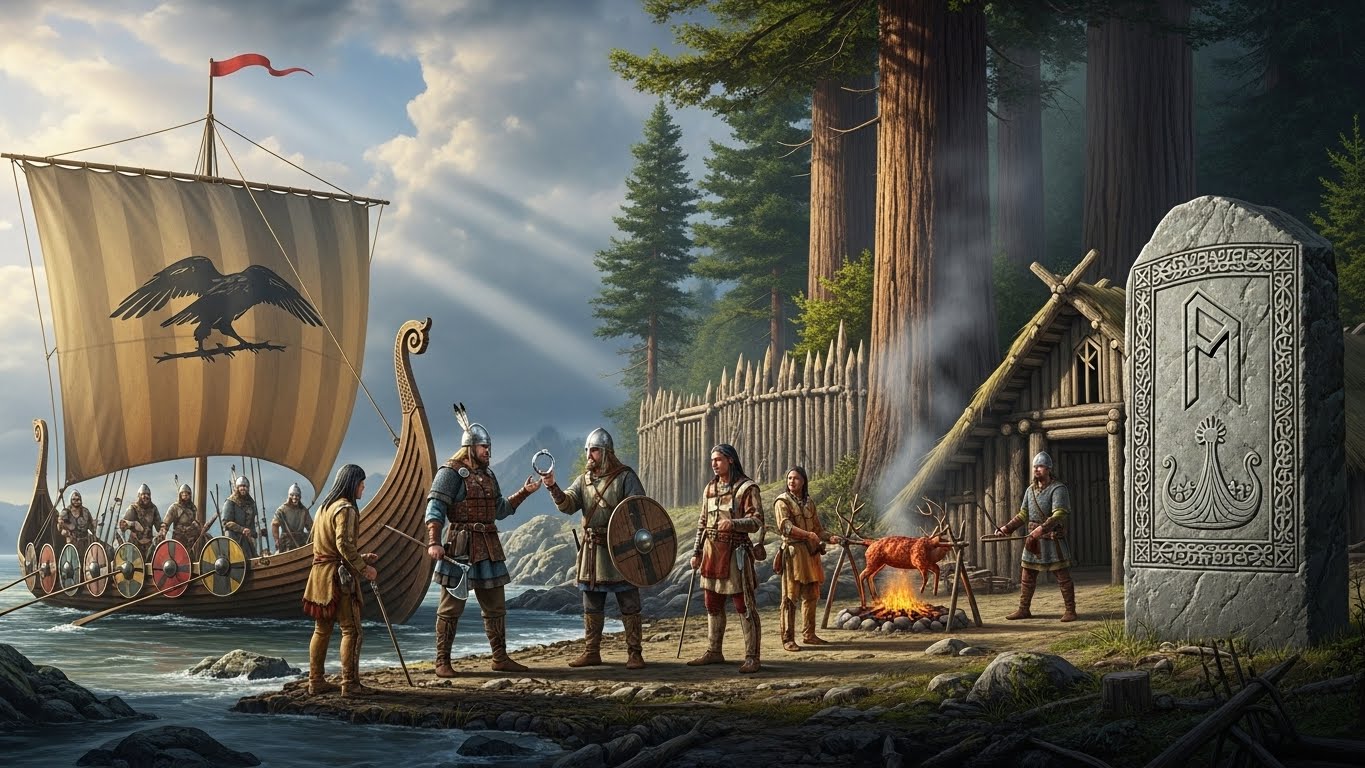


Unraveling one of history’s most intriguing mysteries
Long before Christopher Columbus set sail in 1492, could a Welsh prince have already reached the shores of North America? The legend of Prince Madoc ab Owain Gwynedd has captivated historians, adventurers, and conspiracy theorists for centuries. This remarkable tale speaks of a 12th-century voyage across the Atlantic that, if true, would rewrite the history of European discovery in the Americas.
Who Was Prince Madoc?
Prince Madoc (also spelled Madog) was allegedly the son of Owain Gwynedd, King of Gwynedd in North Wales, who ruled from 1137 to 1170. According to Welsh legend, Madoc was one of seventeen sons, and when his father died in 1170, a brutal succession war erupted among his brothers.
Disgusted by the bloodshed and having no desire for power, Madoc reportedly decided to leave Wales altogether. The legend states that he gathered a crew, provisioned several ships, and sailed westward into the unknown Atlantic Ocean around 1170 AD—more than three centuries before Columbus.

Medieval Welsh vessels would have been similar to Viking longships
The Legendary Voyage of 1170
The Welsh chronicles tell us that Madoc sailed west from Rhos-on-Sea (or possibly Lundy Island) with a small fleet. After months at sea, he and his crew supposedly discovered a fertile, temperate land—believed by some to be the coast of present-day Alabama, Florida, or even Mobile Bay.
So impressed was Madoc with this new land that he returned to Wales to recruit colonists. According to the legend, he made a second voyage around 1171 with ten ships carrying men, women, and supplies to establish a permanent settlement. After this second journey, Madoc was never heard from again.
Timeline of the Madoc Legend
The “Evidence” For and Against
| Evidence Supporting the Legend | Evidence Against the Legend |
|---|---|
| Welsh-Speaking Native Americans: Explorers in the 18th and 19th centuries claimed to encounter Native American tribes (particularly the Mandan) who spoke Welsh words and had lighter skin. | No Archaeological Evidence: Despite extensive searches, no definitively Welsh artifacts from the 12th century have been found in North America. |
| Stone Forts: Fortifications in Alabama and Tennessee were attributed to Welsh colonists, with some featuring architecture similar to Welsh castles. | Late Written Records: The earliest written accounts of Madoc appear in the 1580s—over 400 years after the alleged voyage. |
| Coracles in America: Reports of Native Americans using round boats similar to Welsh coracles. | Political Motivation: The legend gained popularity during Elizabethan times to establish England’s claim to America over Spain. |
| Place Names: Welsh-sounding place names scattered across the American South and Midwest. | Linguistic Analysis: Modern linguistic studies show no credible Welsh influence on Native American languages. |
The Curious Case of the Mandan Tribe
Perhaps the most compelling aspect of the Madoc legend involves the Mandan tribe of North Dakota. Multiple European explorers, including the Welsh explorer John Evans in 1796, reported that the Mandan people had distinctive features:
- Light skin and hair, with some individuals having blue or gray eyes
- Use of round boats similar to Welsh coracles
- Fortification styles reminiscent of Welsh castles
- Alleged ability to understand Welsh words and phrases
However, these claims have been thoroughly debunked. The “light-skinned” Mandans were likely the result of genetic variation common among Native Americans, and the linguistic similarities were either exaggerated, coincidental, or the result of wishful thinking by Welsh explorers hoping to find their legendary ancestors.

Native American villages like those of the Mandan became central to the Madoc legend
Why Does This Legend Persist?
The Madoc legend endures for several fascinating reasons:
1. Cultural Pride
For the Welsh people, the story represents a point of national pride—that a small nation contributed to the age of exploration before the major European powers.
2. Political Utility
During the reign of Elizabeth I, the legend was used to assert English territorial claims in the New World, predating Spanish settlements.
3. The Mystery Factor
The complete disappearance of Madoc and his colonists creates an irresistible historical mystery that continues to captivate imaginations.
4. Alternative History Appeal
The idea that official history might be incomplete or wrong appeals to those who question mainstream narratives.
The Modern Scholarly Consensus
Today, most historians and archaeologists classify the Madoc legend as exactly that—a legend. The scholarly consensus points to several key factors:
No Archaeological Support: Despite over a century of archaeological investigations in areas where Welsh colonists allegedly settled, no credible Welsh artifacts from the 12th century have been discovered.
Genetic Studies: DNA analysis of Native American populations, including the Mandan, shows no European ancestry from the medieval period.
Historical Context: The legend first appeared in writing during the Elizabethan era when England needed to justify territorial claims against Spain, suggesting political rather than historical origins.
Technical Feasibility: While medieval Europeans had the technology to reach North America (as the Vikings proved), there’s no contemporary documentation of Madoc’s voyages in Welsh, English, or other European records.
Key Takeaways
-
✓
Prince Madoc allegedly sailed from Wales to America around 1170 AD -
✓
The legend first appeared in written form over 400 years after the supposed voyage -
✓
No credible archaeological or genetic evidence supports the claims -
✓
The story served important political purposes in Elizabethan England -
✓
The legend remains a fascinating example of how myths shape national identity
A Legend Worth Exploring
Whether true or false, the legend of Prince Madoc offers a captivating glimpse into how societies create and use historical narratives. It reminds us that the line between history and mythology is often blurred, and that our understanding of the past is constantly evolving.
While modern scholarship has largely dismissed the historical accuracy of Madoc’s voyage, the legend continues to inspire books, documentaries, and expeditions. It speaks to our fundamental human desire to explore, to discover, and to imagine what might have been.
Perhaps most importantly, the Madoc legend teaches us to approach historical claims with both an open mind and a critical eye, weighing evidence carefully while appreciating the cultural significance of the stories we tell about our past.
Want to Dive Deeper?
Discover the full fascinating story of Prince Madoc and the evidence that has historians debating to this day!
Watch our complete documentary exploring:
- Detailed analysis of all historical evidence
- Interviews with leading historians and archaeologists
- Virtual tours of alleged Welsh fortifications in America
- The political intrigue behind the legend’s creation
- Why some still believe today
▶ WATCH FULL VIDEO ON HISTORY CANDLE
Don’t forget to subscribe for more fascinating historical mysteries!
Join the History Candle Community
Subscribe to our YouTube channel for more intriguing historical legends, mysteries, and untold stories from around the world.
What do you think? Was Prince Madoc a real historical figure or just a legend? Share your thoughts in the comments below!
© History Candle – Illuminating the Past, One Story at a Time