
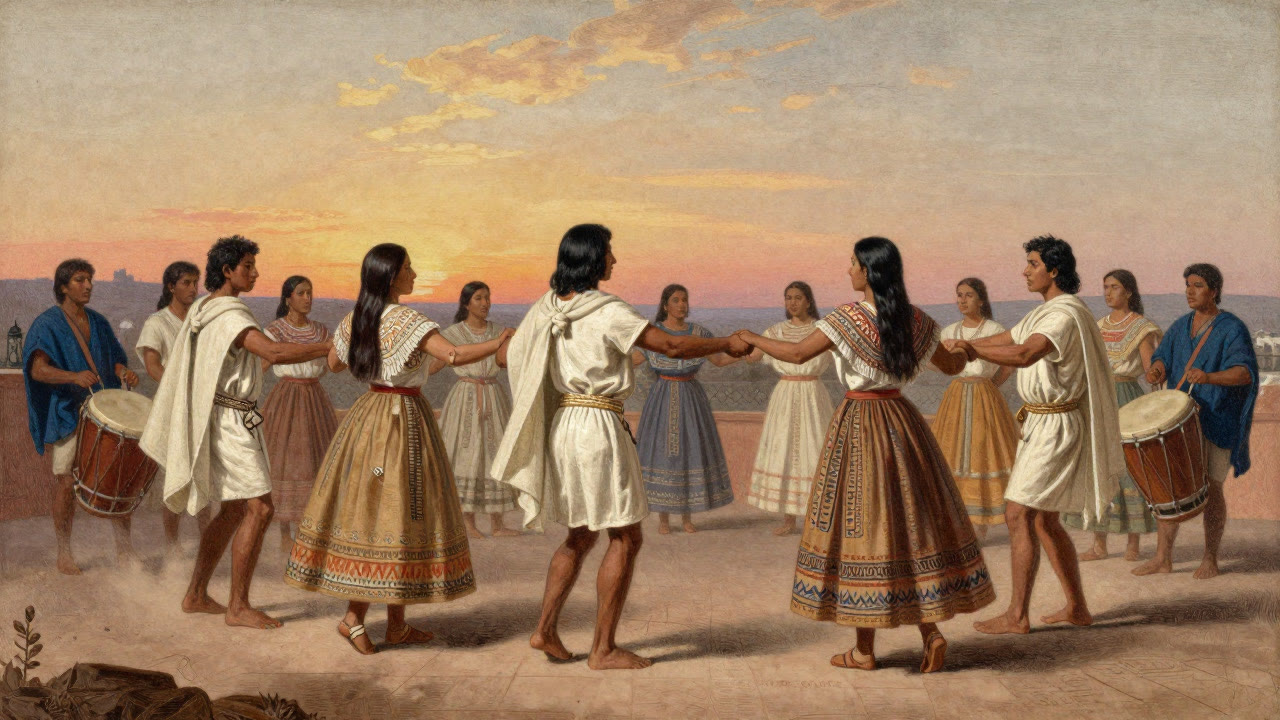
Five hundred years ago, as evening settled over a great lake in the Valley of Mexico, a singer walked among the flowers and decided to ask the birds where the loveliest flowers grow. “Suppose that I ask the brilliant hummingbird, the emerald trembler,” he sang, in Daniel Brinton’s 1887 translation. “They will tell me, they know, where bloom the pretty, sweet flowers.” The flowers he meant were songs. This is the world of Aztec poetry, and of our new documentary.
The short answer
Aztec poetry was sung, not read. In Nahuatl it was called in xochitl in cuicatl, “the flower, the song”, and it was performed to drums, often with dancing. Almost all of it survives in two sixteenth-century manuscripts, the Cantares Mexicanos and the Romances de los Señores de la Nueva España. Many songs carry the name of Nezahualcoyotl, lord of Texcoco, but scholars still debate whether he composed them.
Watch the full video
An 88-minute evening with the poets of ancient Mexico.
This article follows the documentary chapter by chapter. Verses come from public-domain translations by Brinton and Prescott or from the documentary’s own plain renderings from the Nahuatl. Where scholars disagree, we say so.
Flower and song: what Aztec poetry was
Nahuatl, the Aztec language, is still spoken by well over a million and a half people in Mexico. Its speakers loved to pair two words: water and mountain meant a town, black ink and red ink meant writing and wisdom, and flower and song meant poetry.
The word for song, cuicatl, comes from cuica, to sing, a verb also used for birds. Poets did not even claim to invent their songs: “certainly not on earth has true poesy its birth,” one singer says in Brinton’s version. The poet was a listener who caught songs drifting down from a flowery heaven.
The house of song and the great drums
Close to the temples of every Aztec city stood the cuicacalli, the house of song. The friar Diego Durán says that about an hour before sunset elderly men and women brought boys and girls of about twelve to fourteen there, and they danced and sang until well into the night. Missing it without good reason could bring a penalty.
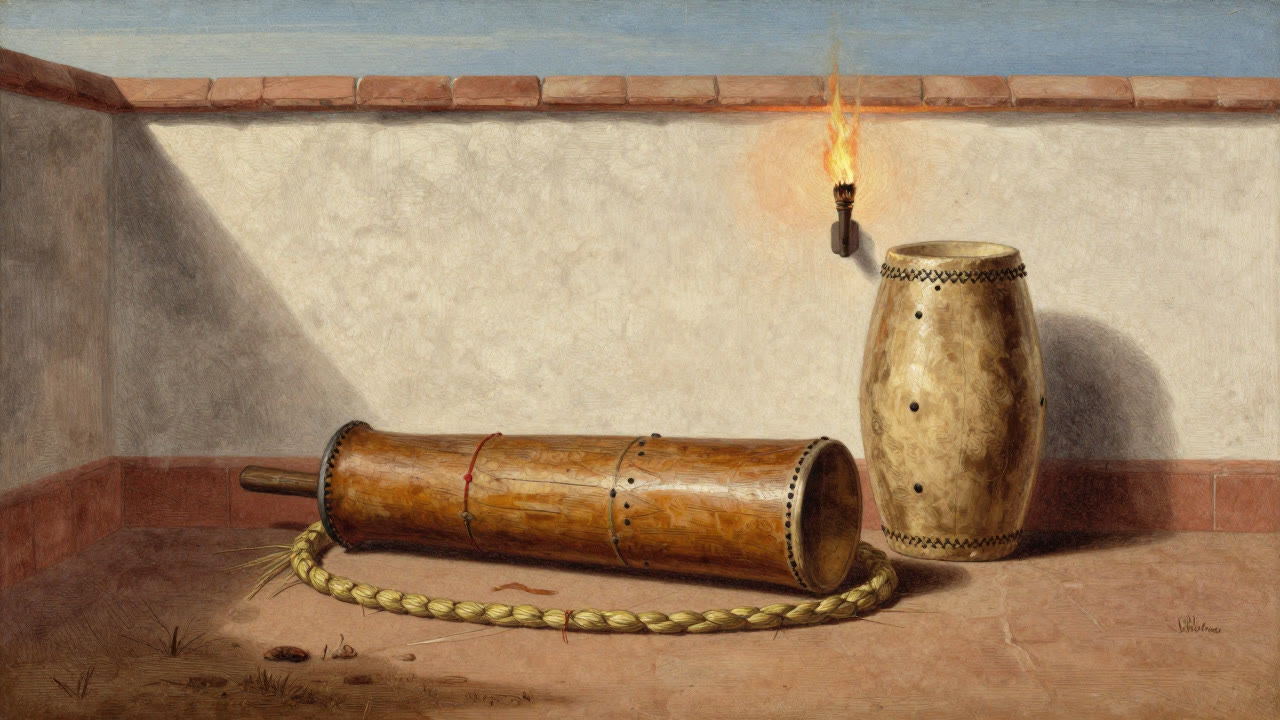
Every song began with a drum. The friar Motolinía describes the huehuetl as a hollow trunk thicker than a man’s body, topped with tight deer skin. The teponaztli lay on its side, with an H-shaped slit that left two wooden tongues, struck with rubber-tipped mallets; Durán says it was honoured almost like a god. Some songs open with lines such as “Tico, tico, toco, toto”. Scholars generally agree these are drum patterns for the teponaztli; many think the vowels mark its low and high tongues, though nobody can be completely sure.
Makers of songs, and many kinds of song
Nahuatl separated the singer, cuicani, from the maker of songs, cuicapicqui. Sahagún says a good singer composes from his own wit and rehearses before he sings in public. There were flower songs of friendship, songs of sorrow, eagle and war songs, and songs in the style of Huexotzinco, Chalco or the Huastec coast, all built from jade, quetzal feathers, hummingbirds and flowers that bloom and fade.
Nezahualcoyotl, the Fasting Coyote
Most of what we know about Nezahualcoyotl’s youth comes from his descendant Fernando de Alva Ixtlilxochitl, writing in the early 1600s, whose account is sometimes more like legend than history. He says the prince, born in Texcoco in 1402, hid in a tree at about sixteen while his father was killed, and later escaped his enemies hidden inside a great drum. In 1431 he was installed as ruler of Texcoco.
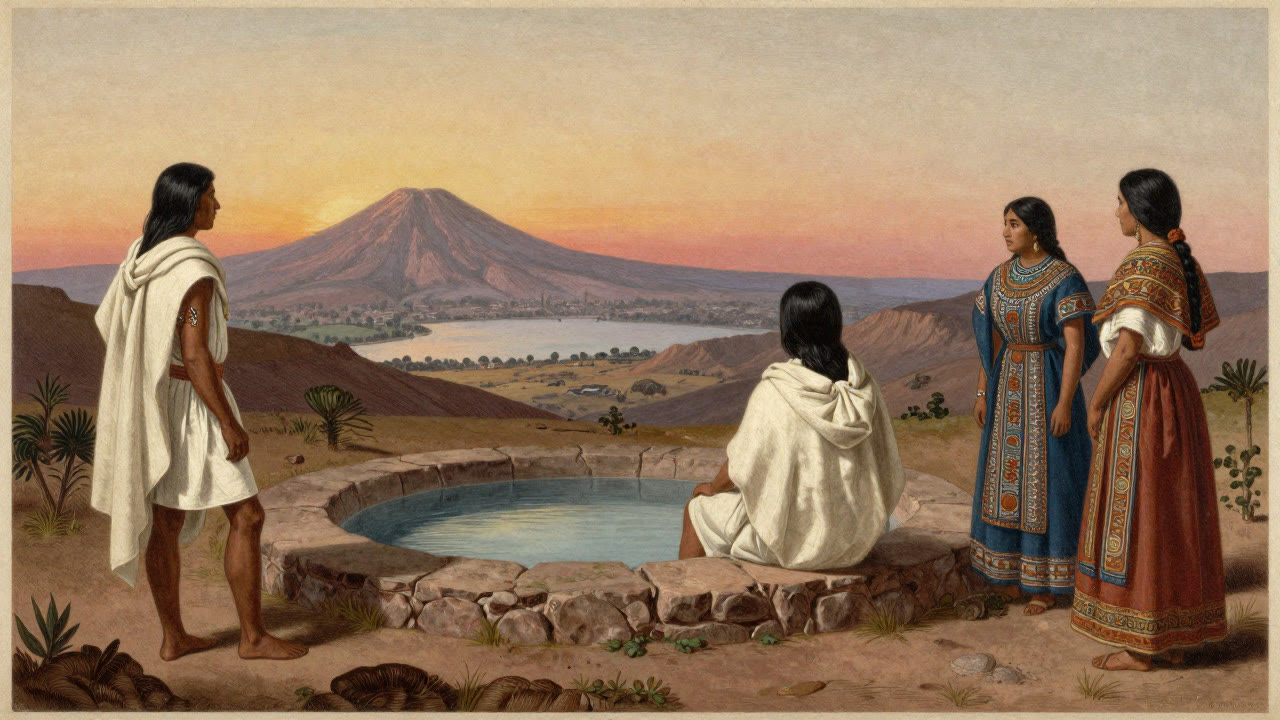
He built the hill garden of Texcotzingo, where water ran in carved channels into rock-cut pools; one is still called the King’s Bath, though not every archaeologist agrees it was a bath. He was also a warrior king, remembered in songs from Chalco as a conqueror.
“Not forever on earth”: the songs in his name
Many songs carry his name, and they return again and again to the shortness of life. The most famous, in the documentary’s plain rendering from the Nahuatl: “Is it really true that we live on the earth? Not forever on the earth, just a little while here. Even jade will shatter, even gold will crack, even the quetzal plume will snap.” If even the most precious things break, what about us?
But did he write them? Ángel María Garibay and Miguel León-Portilla saw him as a real poet and sage. In 1985 John Bierhorst pointed out that a name at the head of a song need not be its author, and that no written source before 1615 speaks of a song he composed. An ode first printed in 1778 was dismissed by León-Portilla himself as a forgery. So we call them songs in his name.
Tepechpan, Huexotzinco and the women of song
Ixtlilxochitl and Prescott tell how the king, captivated by Azcalxochitzin, sent her betrothed, the lord of Tepechpan, to die in battle. A song in the manuscripts has a singer who calls himself Cuacuauhtzin: “Where can we go, so that we never die?” Some scholars suspect the story was shaped on David and Uriah.
Beneath the volcanoes, Tecayehuatzin of Huexotzinco is the host of a long song of many voices. León-Portilla read it as a real gathering of rival poets asking whether flower and song is the only true thing on earth. On Bierhorst’s reading it would be a later performance; nobody can now say whether that evening happened. A singer named Macuilxochitl, a name used by both men and women, tells of Axayacatl wounded in battle; León-Portilla identified her as a daughter of Tlacaelel, which is his own inference.
When the drums fell silent: two fragile books
After the conquest of 1521 some songs turned to grief: “only sad flowers, sad songs, are here in Mexico, in Tlatelolco,” runs Brinton’s translation. Sahagún called the songs “a dense wood”, a thicket where meanings could hide, and a church council of 1555 ruled that the old songs be examined by friars who knew the language. Yet Nahua nobles kept singing, at Easter, at weddings and at the feasts of saints.
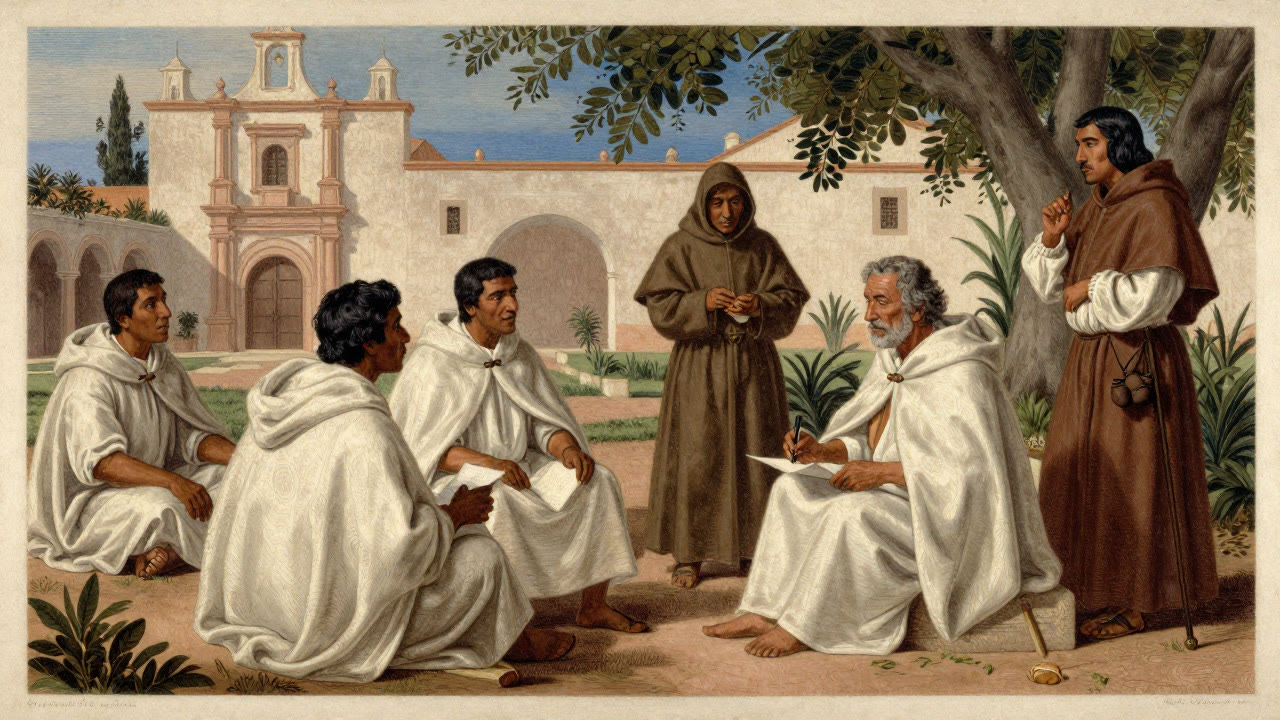
Almost everything survives in two books: the Cantares Mexicanos, about ninety songs, now in the National Library of Mexico, and the Romances, about sixty songs, bound after Juan Bautista Pomar’s 1582 report on Texcoco and kept at the University of Texas at Austin.
Ghosts or philosophers?
León-Portilla saw the songs as the work of Nahua philosophers, the tlamatinime. Bierhorst argued they were “ghost songs” that called the spirits of the dead back to earth, mostly from the colonial period. León-Portilla replied that the songs often say the dead never return. Frances Karttunen and James Lockhart found signs of an old core reshaped after the conquest. The documentary ends with Tochihuitzin, in its own rendering: “We have only come to rise from sleep, we have only come to dream.”
For the setting of these songs, spend an evening in an Aztec noble’s house in Tenochtitlan, or read how cacao served as money across Mesoamerica.
Video chapters
Jump to any part of the video on YouTube:
| Time | Chapter |
|---|---|
| 0:00 | Opening: a singer asks the birds |
| 3:32 | Flower and Song |
| 6:58 | The House of Song |
| 11:44 | Drums of Wood and Skin |
| 18:01 | The Makers of Songs |
| 22:12 | Many Kinds of Song |
| 26:30 | A Language of Birds and Jade |
| 31:06 | The Fasting Coyote |
| 36:08 | The King’s Gardens |
| 40:54 | Not Forever on Earth |
| 46:14 | Whose Songs Are These? |
| 51:14 | The Lord of Tepechpan |
| 55:48 | A Gathering at Huexotzinco |
| 1:01:01 | Women of Song |
| 1:06:04 | Other Voices |
| 1:10:40 | When the Drums Fell Silent |
| 1:15:25 | Two Fragile Books |
| 1:19:51 | Ghosts or Philosophers? |
| 1:24:53 | Only a Little While Here |
Now watch it
Hear the songs in full. If you enjoy it, subscribe for new long-form history.
Frequently asked questions
What is Aztec poetry called in Nahuatl?
The Aztecs called poetry in xochitl in cuicatl, ‘the flower, the song’. Poems were sung aloud, usually to the beat of drums, and very often danced, so the words, the music and the movement belonged together.
Did Nezahualcoyotl really write the poems attributed to him?
Nobody can say for certain. Many songs carry his name, and Garibay and León-Portilla saw him as a real poet. John Bierhorst noted that a name at the head of a song need not be its author, and that no source before 1615 speaks of a song he composed.
Which manuscripts preserve Aztec poetry?
Two sixteenth-century books written after the conquest: the Cantares Mexicanos, about ninety songs, in the National Library of Mexico, and the Romances de los Señores de la Nueva España, about sixty songs, at the University of Texas at Austin.
What instruments accompanied Aztec songs?
Two great drums led the music: the upright huehuetl with its deer-skin head and the teponaztli, a slit drum with two wooden tongues. Around them played rattles, flutes, whistles, conch shells and the bells worn by dancers.
What is the ‘ghost songs’ debate about Aztec poetry?
León-Portilla read the songs as the work of Nahua philosophers. In 1985 John Bierhorst argued that they were ghost songs that called the spirits of the dead back to earth. León-Portilla replied that the songs often say the dead never return.
Sources and further reading
- Daniel G. Brinton, Ancient Nahuatl Poetry (1887). Project Gutenberg
- W. H. Prescott, History of the Conquest of Mexico (1843). Project Gutenberg
- Durán, Sahagún, Motolinía and Alva Ixtlilxóchitl (sixteenth and seventeenth centuries).
- Miguel León-Portilla, Trece poetas del mundo azteca.
- John Bierhorst, Cantares Mexicanos: Songs of the Aztecs (1985).
- F. Karttunen and J. Lockhart, Estudios de Cultura Náhuatl 14 (1980).